Route: Bumthang, Gasa, Paro, Punakha, Thimphu, Trongsa, Wangdue Phodrang
The Snowman Trek is an extension of the beautiful Laya Gasa Trek, and leads from Laya into high altitudes of the Bhutanese Himalayas. It takes tough, experienced trekkers into the Lunana region and further on to Gangkhar Puensum and Bumthang or down to Sephu in Trongsa district, depending on which route you choose. The Snowman trek leads through the most remote areas up to very high altitudes. Trekkers camp above 5,000 m, and depending on the weather, the camps are sometimes on snow.
Day 1- Arrive Paro Airport by Drukair (Bhutan)
Your introduction to our enchanting kingdom begins on a flight over the Himalayas into the lush green valley of Paro; truly one of the world’s most spectacular sights. Flying into Paro is a unique experience. You will see some of the world’s highest, most majestic peaks and the approaching valley, with its ancient forests, monasteries, temples and farmhouses.
Paro Sights & Acclimatization Day.
Visit the Rinpung Dzong. A flagstone path climbs gently to the dzong from a beautiful covered wooden bridge with a guardhouse at each end. Built in 1645 AD, this massive fortress is today the seat of the district administration and home to the monastic school. Its central tower (utse), with superb woodwork, is one of the most beautiful in the country.
Receive blessings for a safe and memorable Snowman adventure at Kyichu Lhakhang, one of the oldest temples in the kingdom, built in the 7th century by a Tibetan king to pin down a giant demon. A sacred orange tree in its courtyard is said to bear fruit in every season. In the evening, watch a lively local archery match, meet the people and stroll around town. Overnight Paro (Alt; 2280m)
Day 2- Start of Snowman Trek/ Drukgyel Dzong – Shana (17km/ 5-6hr)
After a hearty breakfast, take a short drive to the ruins of Drukgyel Dzong. On the way, you can see the Tiger’s Nest clinging to the cliff on the right. The road ends at Drukgyel village, where many treks in Bhutan begin, and your trekking crew will be waiting for you here.
We walk along the Paro Chhu valley, past the small settlements of Chang Zampa and Mitshi Zampa with their traditional farmhouses. Just before camp, we pass an army checkpoint, where your guide shows your trekking permit. We camp at Shana (2800m).
Day 3- Shana – Thangthangkha (22km/ 7-8hr)
From Shana, the trail continues upriver, winding in and out of rhododendron and blue pine forest. As we enter Jigme Dorji National Park, keep an eye out for wildlife and the changing vegetation as we climb. Tonight we camp at Thangthangkha (3,520 m).
Day 4- Thangthanka – Jangothang (19km/ 5-6 hr)
After an hour’s walk from camp, we leave the tree line and head into the high mountains. At the halfway point of our hike, we cross Tengethang, a winter home of the migratory yak herders. Arriving at Jangothang (4040m) we can watch the sunset on Mt. Jomolhari (7,326 m) and Mt. Jichu Drake (6,989 m).
Day 5- Jangothang (Rest Day)
On this acclimatisation day, there are several day-hike options. The first is a three to four hour excursion up the ridge to the north for great views of Jichu Drake. The second is to hike up towards the head of the valley in the direction of Jhomolhari. The third is a trek up the main valley towards the last house and onward toward Jichu Drake, this gives a great view of where we will be going in the next few days. The final alternative is a fishing expedition to Tshophu, a high-altitude lake about a two hour hike away.
Day 6- Jangothang – Lingshi (20km/ 6-7hr)
From Jangothang we climb to the first of many high passes, Nyile La (4,890 m), about four hours’ ascent. Descending the other side we will encounter sparse juniper and rhododendron and pass many yak herder camps. From this area on we start to see herds of blue sheep. Arriving in Lingshi we set up camp at 4150m
Day 7- Lingshi – Chebisa (14km/ 4-5 hr)
In the morning, visit Lingshi Dzong (Yugyel Dzong), built in the 17th century to control travel between Tibet and Bhutan. Today’s walk is shorter, so the pace is relaxed. At camp in Chebisa (3,850 m), there is time to visit the village and see Bhutanese village life.
Day 8- Chebisa – Shomuthang (13km/ 4hr)
Crossing the Gombu La pass at 4350m, we descend into a rhododendron filled valley, and continue past some yak herder camps to Shakshepasa where we camp at 3980m
Day 9- Shomuthang – Robluthang (18km/ 7-8hr)
An early morning start will get us on the way to Jhari La pass at 4747m. Descending to Tsharijathang, the valley where herds of Takin (the national animal of Bhutan) are normally seen. From here we climb to our camp at Robluthang at 4160m.
Day 10- Robluthang – Limithang (19km/ 7-8hr)
An early start and a strenuous climb lead to Sinche La pass (5,005 m). Descending to Lemithang we’ll see Mt. Gangchenta (6840m) and the glacially carved Gangchhenta valley. Gangchhenta means Great Tiger Mountain. We camp at 4140m.
Day 11- Limithang – Laya (10km/ 4-5hr)
A shorter hike follows a trail in and out of a heavily wooded, uninhabited valley. Climbing up out of the forests we will be rewarded with some great views of Gangchhenta and Masang Gang (7165m) mountains. We camp at Laya at 3840m.
Day 12- Laya (Rest Day)
Staying in Laya for the day we will get a chance to see the village with its community school, hospital, archery field and the first shop since the Paro Valley. Laya is a unique village of about 800 people with their own language, customs and distinct dress. The women keep their hair long and wear peculiar conical bamboo hats with a bamboo spike at the top. They wear a lot of silver jewellery down their backs, and for many women this includes a row of teaspoons.
Day 13- Laya – Roduphu (19km/ 6-7hr)
The trek leads gradually downhill to the Lunana trail junction, then makes a gradual climb to the camp through a forest of conifers, maple and rhododendron. The trail improves and becomes wider as we climb out of the river valley. We camp at Roduphu near a small stream at 4160m.
Day 14- Roduphu – Narithang (16km/ 8-9hr)
It is a long hike, first crossing the Tsimo La pass at 4950m. Descending to Narithang we pass some dwarf rhododendron and hike in the shadow of Gangla Karchung peak (6395m). We camp at 4900m
Day 15- Narithang – Tarina (18km/ 5-6hr)
Climb to Karchung La pass at 5240m and down to the glacial lakes that are the source of the Tang Chhu river. Above the lakes are the mighty peaks of Jejekangphu Gang (7300m) and Tsenda Kang (7100m). We camp at Tarina, 4020m.
Day 16- Tarina – Woche (15km/ 5-6hr)
The walk leads down through conifer forests, following the upper reaches of the Pho Chhu river. The trail then climbs over a ridge and drops to the village of Woche at 3940m. The trek has now entered the Lunana region.
Day 17- Woche – Lhedi (19km/ 7-8hr)
It’s a gradual climb from Woche to the Keche La pass at 4580m, then downhill to Thega village. The hike continues to Lhedi village where we camp at 3600m.
Day 18- Lhedi – Thanza (19km/ 6-7hr)
The trail climbs gradually following the main source of the Pho Chhu to Chozo village. At the small Chozo Dzong there are some lay monks. Above Chozo the valley opens as we approach Thanza village near the foot of Zongophu Gang (7,100 m), also known as Table Mountain. We camp at Thanza, 4080m.
Day 19- Thanza (Rest Day)
This day is a fantastic opportunity to interact with the hospitable local villagers, and explore the beautiful surrounding area, our farthest point in the Lunana valley. Or relax around camp and rest for the tough days ahead. As Thanza is a transfer point for horses and yaks, it is important to have a day here for our staff to ensure all the necessary yaks are rounded up by the local herders who do not operate on ‘Western time’! Camp 4080m.
Day 20- Thanza – Tshorim (19km/ 8-9hr)
Today’s trek starts with a climb up to the ridge, from where there is a great view of Table Mountain and Thanza valley below. We cross the ridge, and enter a small valley with a stream running through it.
We follow the stream up the valley, enjoying the view of snow capped mountains and have lunch near the bridge. We then climb out of the valley, crossing some small ridges, to reach our campsite at Tshorim (5,125m).
Day 21- Tshorim – Gangkar Puensum Base Camp (16km/ 6-7hr)
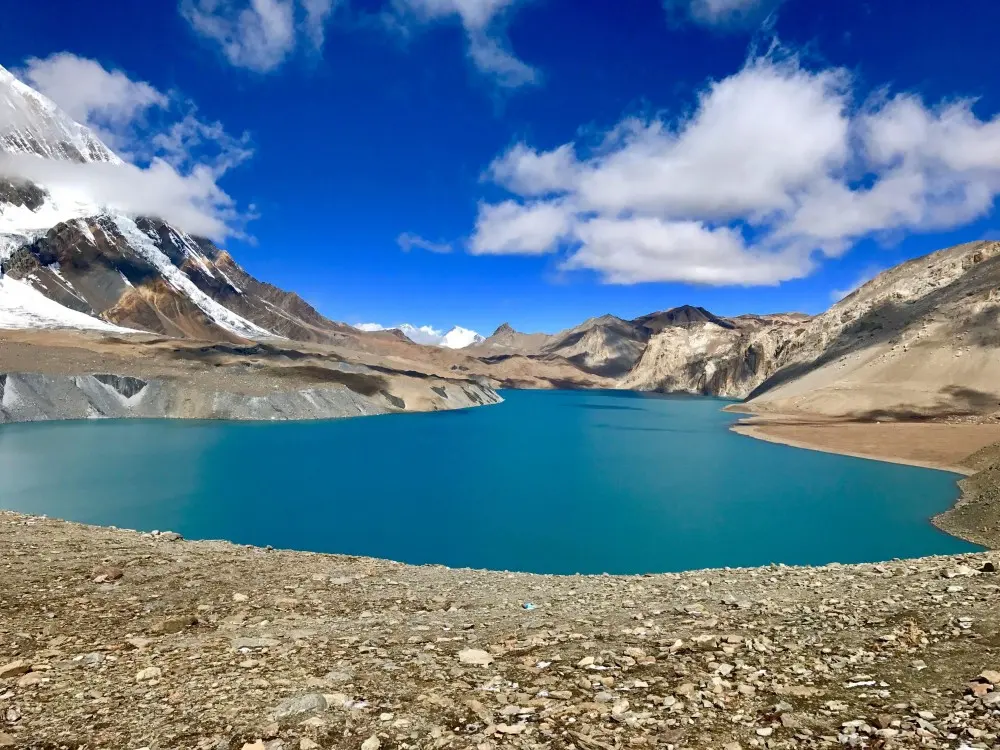
Today’s trek is one of the highlights of the trip. The day starts with a short climb to Tshorim Lake. We walk around the side of the lake, enjoying the panoramic view of Gophula ranges. The final stretch Gupho-la pass (5,230m) is very short.
After crossing the pass, we descend to the base camp, walking along the ridge and enjoying a great view of Gangkar Puensum. If you like, you can detour left and climb a pyramid-shaped peak for a better view, or you can go directly to base camp (4,970m) near the Sha Chu, where we will set up the camp.
Day 22- Gangkar Puensum Base Camp – Geshe Woma (14km/ 6-7hr)
The trek is not yet over. The trail follows along the Sha Chu river and descends gradually to Geshe Woma (4,200m) where we camp.
Day 23- Geshe Woma – Warathang (18km/ 8-9hr)
The path follows the Sha Chu for two and a half hours until the stiff climb to Saka La begins. The trail is hard to see here, so we keep our eyes on the top of the ridge to stay on course.
We stop for lunch near a yak herder’s camp, then climb up to Saka-la pass (4,800m). There are stunning views on the descent to the lakes and another short ascent leads to Wartangle-la pass (4,590m). Scenery once again is stunning with small lakes and the mountain peaks. We camp at 4,000m.
Day 24- Warathang – Dur Tshachu (14 km/ 5hr)
A short half-hour climb takes us up to Juele-la pass (4,400m). After crossing the pass, descend to the riverside through dense rhododendron, juniper and conifer forests. We then cross a bridge and, after a short climb, reach Dur Tshachu hot springs, where Guru Padmasambhava is said to have bathed in the 8th century. You can soak yourself in the hot-spring and relax.
Day 25- Dur Tshachu – Tshochenchen (16km/ 8-9hr)
From the springs, it is a long, steady climb with great views of the Lunana mountains. Eventually the ground levels out, and we see several beautiful deep blue lakes, yaks grazing on the surrounding pastures, and yak herders’ camps (3,850m).
Day 26- End of Snowman Trek/ Tshochen-chen – Bumthang (21km/ 11-12hr)
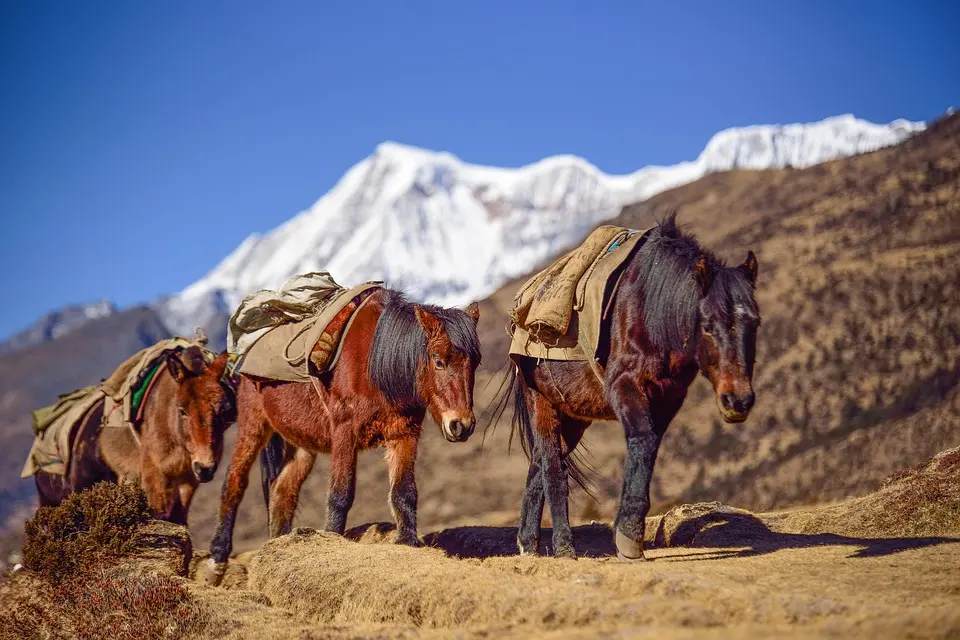
This is the last day of the trek where you change from yak to pack ponies. We must set off very early in order to reach Bumthang before dark. The path follows the Chamkhar Chhu, descending gradually with a few climbs. The trek ends when we reach Dur village where transport will pick us up and drive to Bumthang. Dur village is known for its hot-spring. If you wish you can spend some time relaxing in the hot-spring which is known for its healing properties. Overnight in resort in Bumthang. (Alt; 2580m).
Day 27- Landscape Tour to Wangdue & Punakha (212km/ 8hr)
After breakfast, leave Bumthang, the cultural heartland of the nation, and drive to Punakha, the old capital, on one of the most scenic routes in Bhutan, over Yotong La (3,425 m) and Pele La (3,300 m), home of the satyr tragopan pheasant.
On the way, visit Trongsa Dzong, built in 1648, a vast white fortress that appears to grow directly up from the narrow green ridge on which it is constructed. It is one of the most powerful Dzongs and even today the crown prince of Bhutan must first become its Trongsa Penlop (governor) before he can become king.
On arrival, visit Punakha Dzong, the “Palace of Great Happiness”, seat of the district administration. It stands between the Pho Chhu and Mo Chhu (the male and female rivers). Built in 1637 AD, it is where Bhutan’s first king was crowned on 17 December 1907, and many consider it the most beautiful dzong in Bhutan. It is also the winter home of the Central Monastic Body and its Chief Abbot.
The evening is free. You can stroll around Wangdue Phodrang town. Overnight Punakha & Wangdue. (Alt; 1240m).
Day 28- Thimphu Sightseeing & Paro Sojourn (145km/ 4.5hr)
On the way, stop for tea at Dochu La (3,150 m), with spectacular views of the eastern Himalayas. On a clear day you can pick out peaks such as Gangkhar Puensum that you passed on your long trek. After walking around the 108 stupas on the pass, drive on to Thimphu.
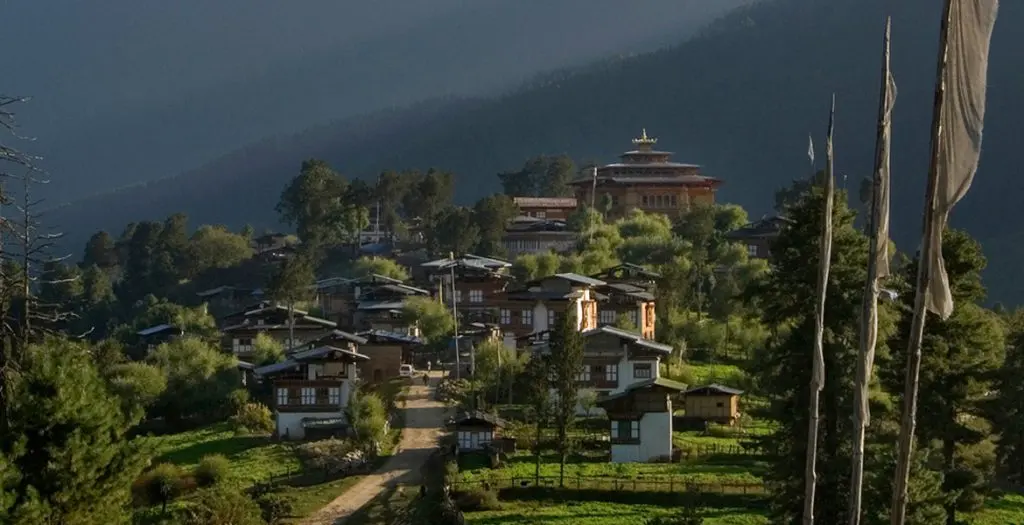
Thimphu is a small, charming capital city nestled in the heart of the Himalayas. It is nothing like what a capital city is imagined to be. Most houses and buildings are painted and built in the traditional Bhutanese style.
Drive up to Buddha Point, home of the giant Buddha Dordenma statue, for a beautiful view over Thimphu. On the way down, walk around the Memorial Chorten, a large stupa built in memory of the Third King and a favourite place of prayer for local people.
Visit the Institute for Zorig Chusum (the thirteen traditional arts and crafts), followed by the Textile Museum, the Handicraft Emporium and some local craft shops.
Visit Tashichho Dzong, which houses the throne room, government offices and the Central Monastic Body.
Walk along Norzin Lam to the Clock Tower square and shop for souvenirs.
In the evening, drive to Paro and visit a village home for a traditional Bhutanese dinner with the local spirit, “ara” (it tastes somewhat like Japanese sake). Then relax in a traditional hot stone bath (“menchu”). River rocks are heated and dunked into a large wooden tub with herbs. The bath is believed to have healing properties. Overnight Paro. (Alt; 2280m)
Day 29- Departure
Our representative will see you off at the airport. Tashi Delek!
Good to know
- This is a private tour for you and your group, with a licensed guide, private vehicle and driver. We can adjust the route, hotels and pace.
- Your Bhutan visa and the Sustainable Development Fee are arranged by us. See visa & entry and the full trip cost.
- Not sure when to go? Read the best time to visit Bhutan or check the festival calendar.
- Drukyul Holidays is licensed by Bhutan's Department of Tourism (Licence No. 1030023).